
5/30/2026
As SNL’s Jeremy Culhane doing his Tucker Carlson impression says, “What’s going on? What are we DOING?” Those sketches have come at a perfect time as a Cubs fan, because that perfectly encapsulates the season thus far. As I am writing this, it is not even June yet, and the Cubs have had two separate 10 game winning streaks, as well as most recently a 10 game losing streak. Put that all together, and the Cubs are entering the summer months at 31-27, 5 games back from the Brewers in the NL Central. There are certainly worse places to be at this point in the season, but as a fan, it is incredibly infuriating seeing the potential of a team for a period of time, and then just a week later they are playing a lifeless brand of baseball. So what exactly is going on?
Let’s take a look at some of the offseason moves that the Cubs and Jed Hoyer made to build on a team that pushed the Brewers to the brink in the NLDS last year. The big elephant in the room going into the off-season was what the Cubs were going to do with Kyle Tucker. The Cubs famously made a trade for what could be just one year for the impending free agent Kyle Tucker in the 2024 off-season, and for most of the year he performed like a big money superstar. Tucker finished the year with an .841 OPS and a 4.5 WAR, which on the surface is a very solid year for any big-leaguer. But, Tucker battled nagging injuries in the 2nd half of the year and his performance faltered, as evidenced by a batting line of .225/.348/.342 (batting average/on base percentage/slugging percentage). On top of this, just from a fan’s perspective, Tucker’s flat affect during this slump contributed to a perception that he is not the leader that most teams would want to pay big money to. The Cubs decided to not pony up to deliver a big offer for Tucker, and he annoyingly ended up on the superteam Los Angeles Dodgers.
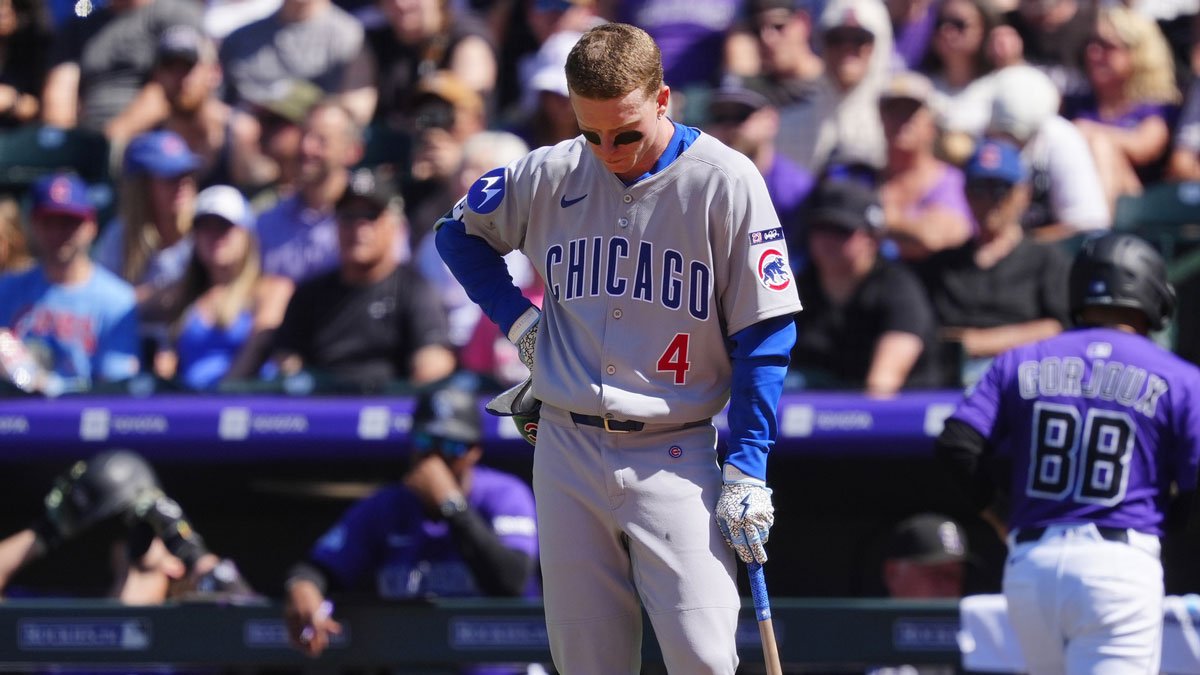
How did the Cubs plan on replacing this production, especially Tucker’s first half production which had him looking like a top 10 hitter in the league? The big answer appeared to be when they signed 3rd baseman Alex Bregman to a 5-year-175 million dollar contract. On the surface, this was an exciting signing, as the Cubs acquired a steady, smart, and consistent ball-player that carries a reputation as a great leader. This would push Matt Shaw to a super utility role, allow Seiya Suzuki to play right field again, and open up designated hitter at bats for top prospect Moises Ballesteros. Looking deeper into the signing, there were definitely some concerns. Bregman is 32 years old, which typically in baseball, is an age where top level players are at the very end of their prime years. I think about contracts like Albert Pujols to the Angels and Miguel Cabrera with the Tigers. The Tigers definitely got many great seasons out of Cabrera, so this point is maybe more relevant with Pujols, but these teams were paying big bucks for previous production, maybe not taking into account what the future years would look like. Towards the end of these deals, Pujols and Cabrera were just not the same players, and the contracts were just so expensive that these teams were just stuck with them throughout their twilight years. I am not saying this will happen with Bregman, but it is definitely in the realm of possibilities. Since 2022 in which he posted an .OPS of .820, he has posted years of an .804 OPS and a .768 OPS in his last full seasons. That could potentially be illustrating that the Cubs paid for past production, as opposed to paying for what they would anticipate his production to be going forward. Currently, Bregman has posted a .696 OPS in 2026, which would easily put him as his worst batting season as a professional.
In the off-season, the Cubs made two prevalent moves to bolster both the starting rotation and bullpen. First, the Cubs traded a package that included their top prospect at the time, Owen Caissie, for Marlins pitcher Edward Cabrera. Cabrera has had games where he shows flashes of brilliance, but unfortunately has not put it together. Cabrera has posted a 4.00 ERA in 10 games started, with a pedestrian 47:20 K:B ratio, cumulating a -0.2 WAR. In other words, he has been a slightly below average pitcher, which is not what they were hoping for when they traded a top 50 prospect for him. Unfortunately, Cabrera recently hit the injured list and has been added to an extensive list of injured Cubs pitchers. Soon enough, they might start pulling people from the crowd to throw innings.
The other big pitching move was to sign 33-year-old reliever Phil Maton to a 2 year deal to bolster the bullpen. Anecdotally, it feels like everytime I am watching a game this year, manager Craig Counsell is motioning to bring in Maton from the bullpen, which is starting to bring me guttural anger each time I see him come into the game. I don’t need to list off a ton of statistics to show how bad Maton has been this year. In 17.2 innings of work this year, he has given up 15 earned runs. That comes out to a 7.64 ERA. Maton has simply not been the high leverage arm that the Cubs had hoped for. At this point, the Cubs should not fall into the sunk cost fallacy of seeing things out through the rest of his 2-year-deal – I would much rather see a young pitcher from Triple A get innings and experience as opposed to continuously trying to make it work with Maton. The Maton designated for assignment notification is going to HIT for all Cubs fans when it does.
So Bregman, Cabrera, and Maton were the big moves that the Cubs made in the off-season. Most pundits gave the Cubs high marks for these moves, and a lot predicted them to win the NL Central, which clearly could still happen. But at this point, I just don’t think it’s the likeliest of outcomes, as these 3 moves have just not delivered to this point. This was an incredibly important season for the way the Cubs are constructed. Outfielders Ian Happ and Seiya Suzuki are in the last years of their contract. Shortstop Dansby Swanson is entering the end of his athletic prime (as is Bregman). This was SUPPOSED to be a year that the Cubs really made a run for another title. If this season does not turn around soon, would the Cubs actually entertain offers for Happ and Suzuki at the trade deadline? With the team’s performance so far this year, I am preparing for a potential Cubs sell-off at the deadline like in 2021 in which they dealt Anthony Rizzo, Kris Bryant, and Javier Baez. This team clearly has the potential to put it together, with 2 separate 10 game winning streaks. With a National League that includes the Dodgers, Braves, Brewers, and Padres, the Cubs would have quite a road to get through to make it to the World Series. Baseball is quite weird as we know. The Cubs could very well turn around and start another win streak – it has after all been a season of extremes thus far.


What are your thoughts?